
The work behind the object.
Every Yalla piece carries the marks of a handmade process — from shaping and preparation to painted details, pattern work, finishing, and careful handling.
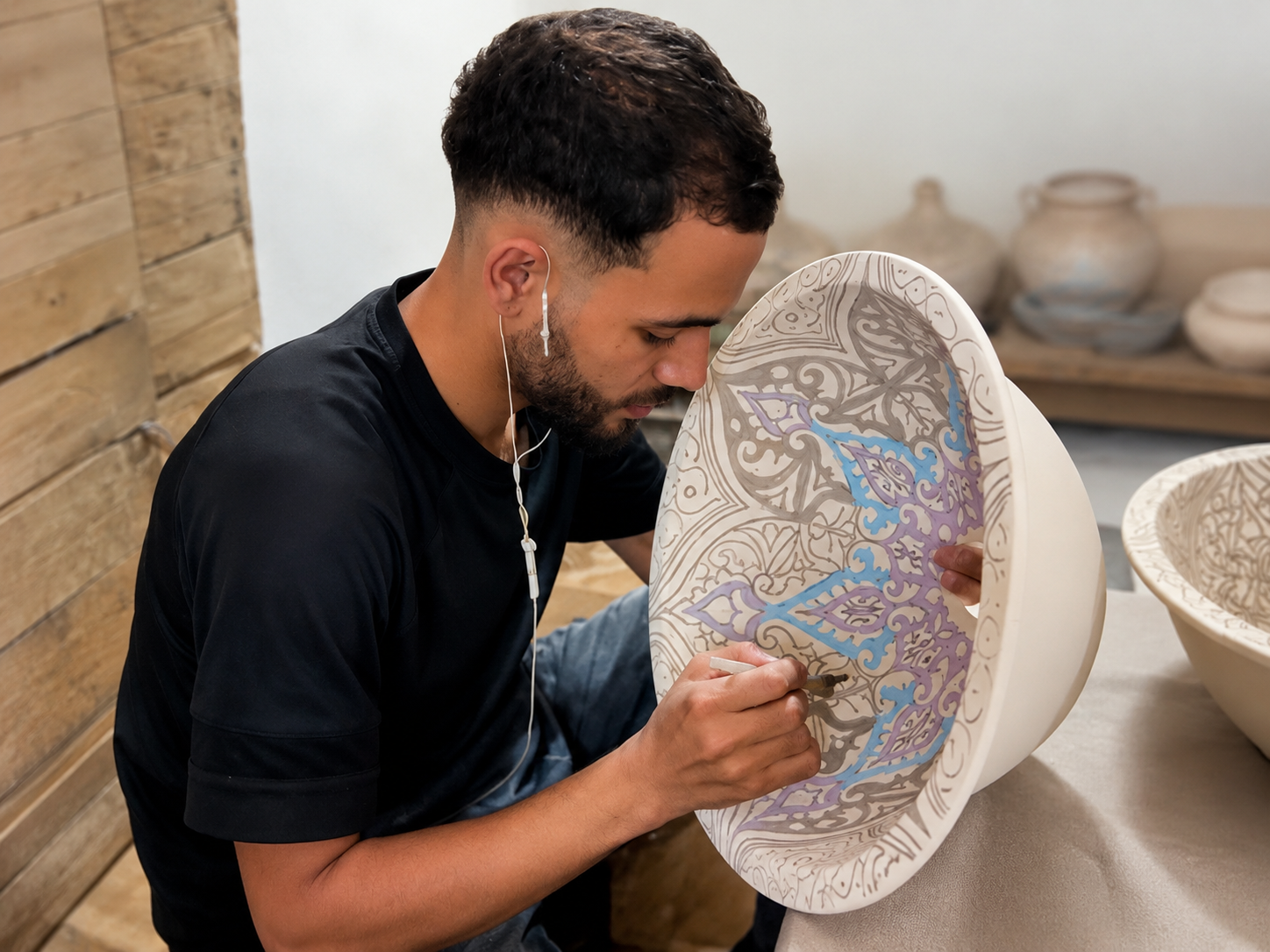
Guided by the eye and hand of the artisan.
In Abderrahim’s workshop in Morocco, each piece moves through careful stages of work. The process is guided by the eye, hand, and judgment of the artisan.
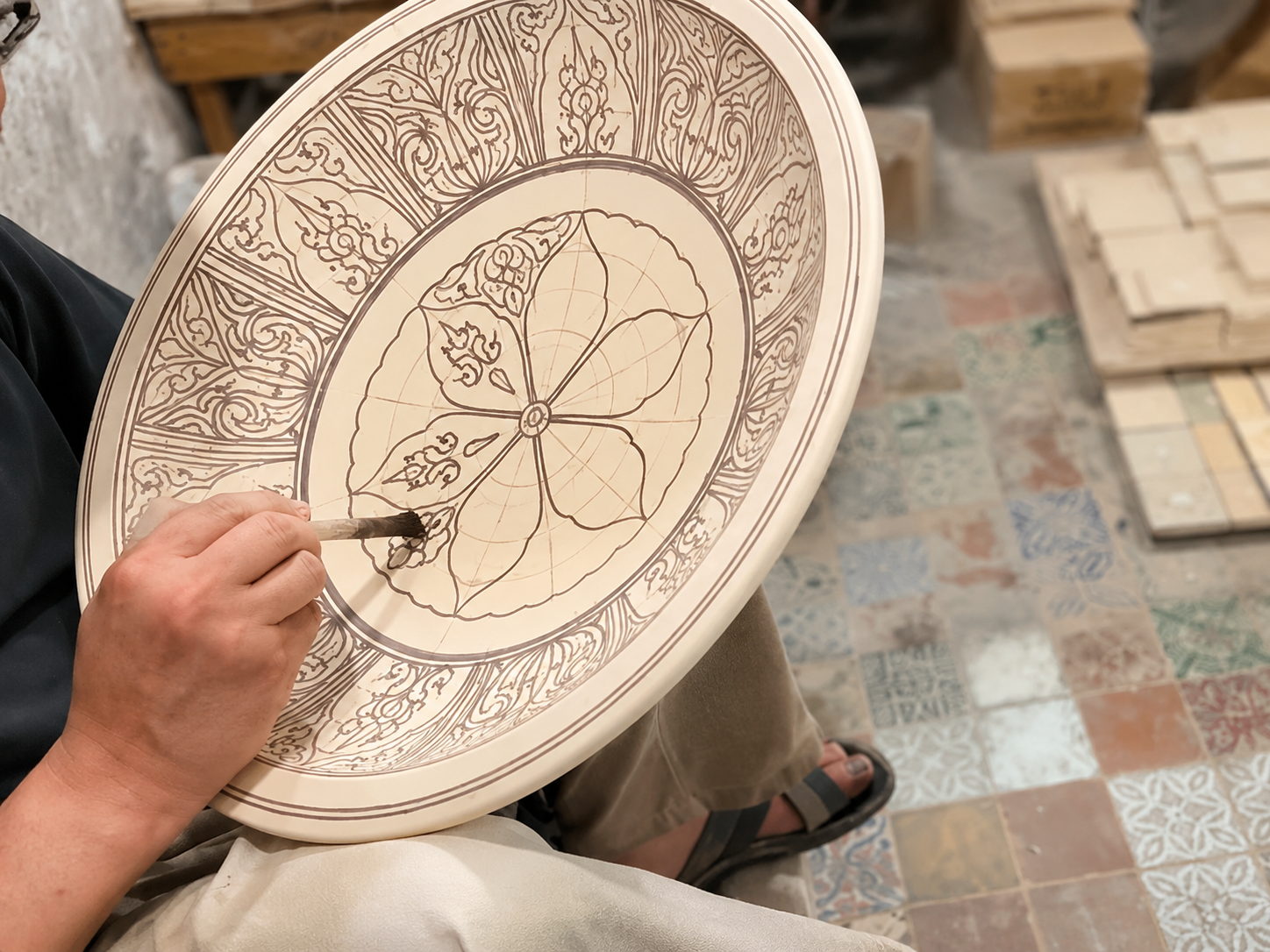
Expressive surfaces, applied slowly.
Pattern gives each piece its rhythm. Lines, colors, and decorative details are applied with patience, creating surfaces that feel expressive rather than uniform.
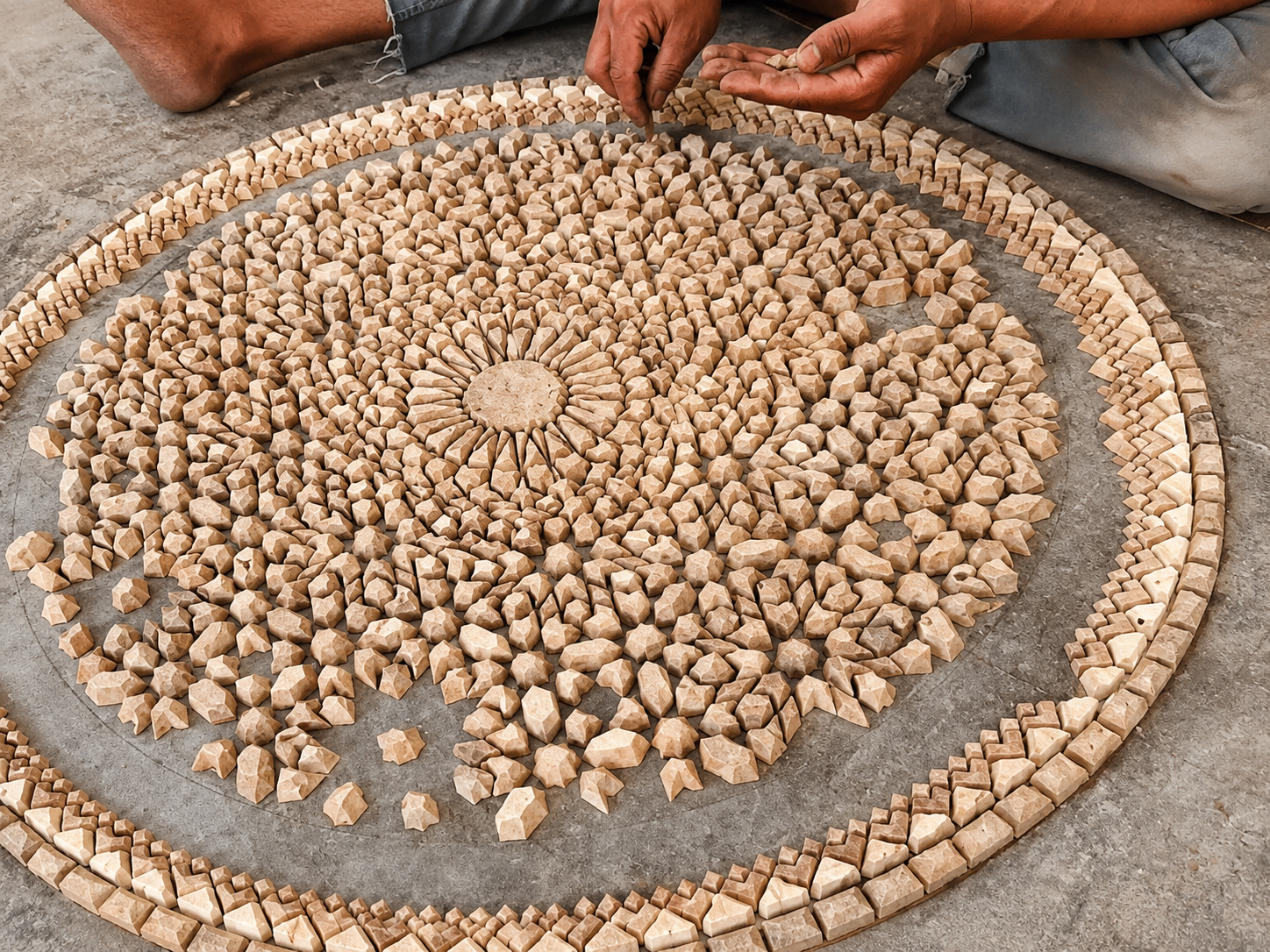
Precision in every placed detail.
Some works include mosaic-style assembly and hand-placed decorative elements. These details show the time and precision behind Moroccan artisan design.
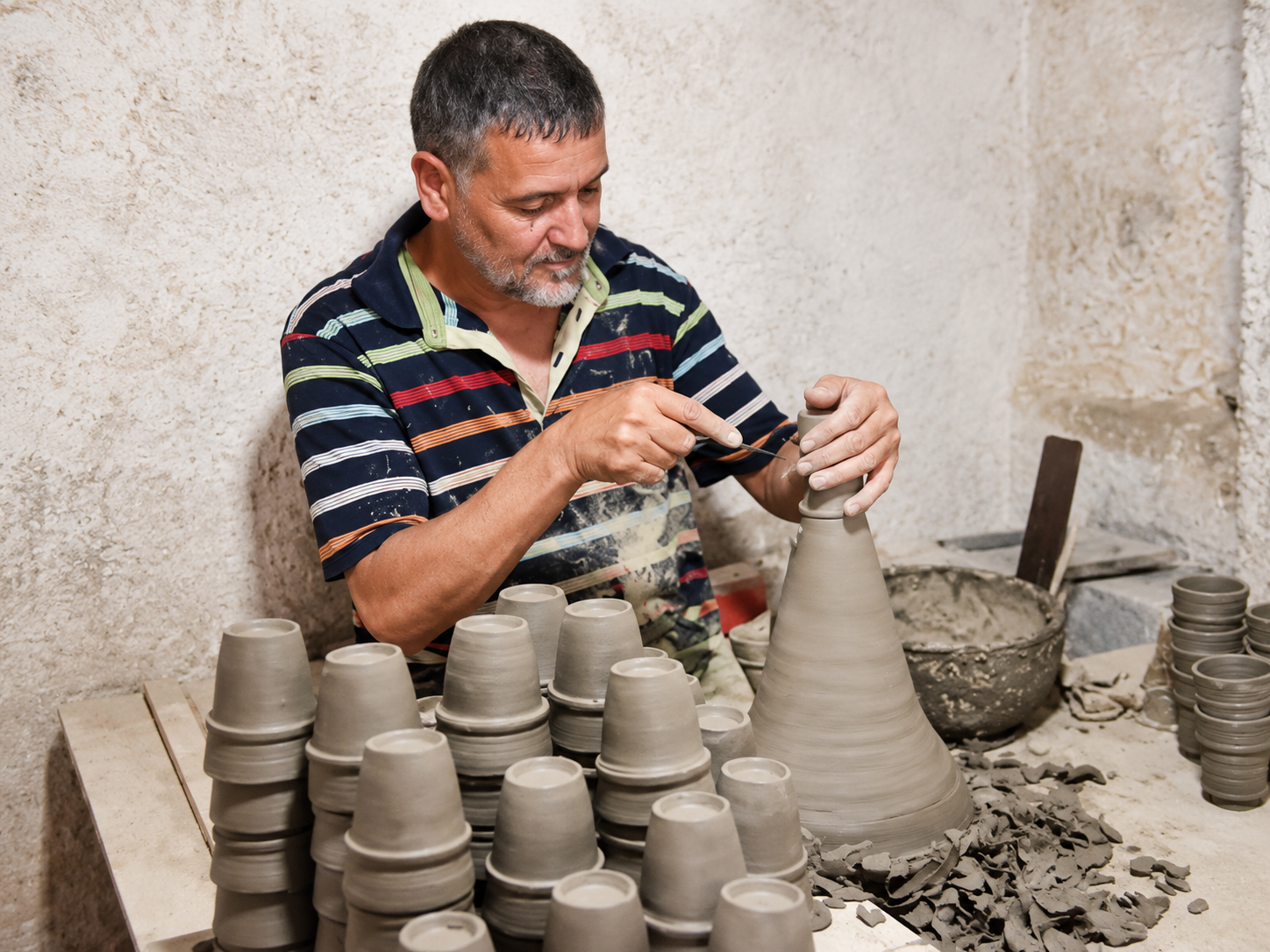
The object begins with form.
Before the finished surface, each object begins with form. Clay is shaped, prepared, and refined before the decorative stages begin.
No two pieces read exactly the same.
Small differences in pattern, color, texture, alignment, and finish are natural characteristics of handmade work. These variations are not flaws — they are part of what makes each piece distinct.